

Categories
Moving to Colorado SpringsPublished August 31, 2026
Colorado Springs Weather and Elevation: What Newcomers Should Know

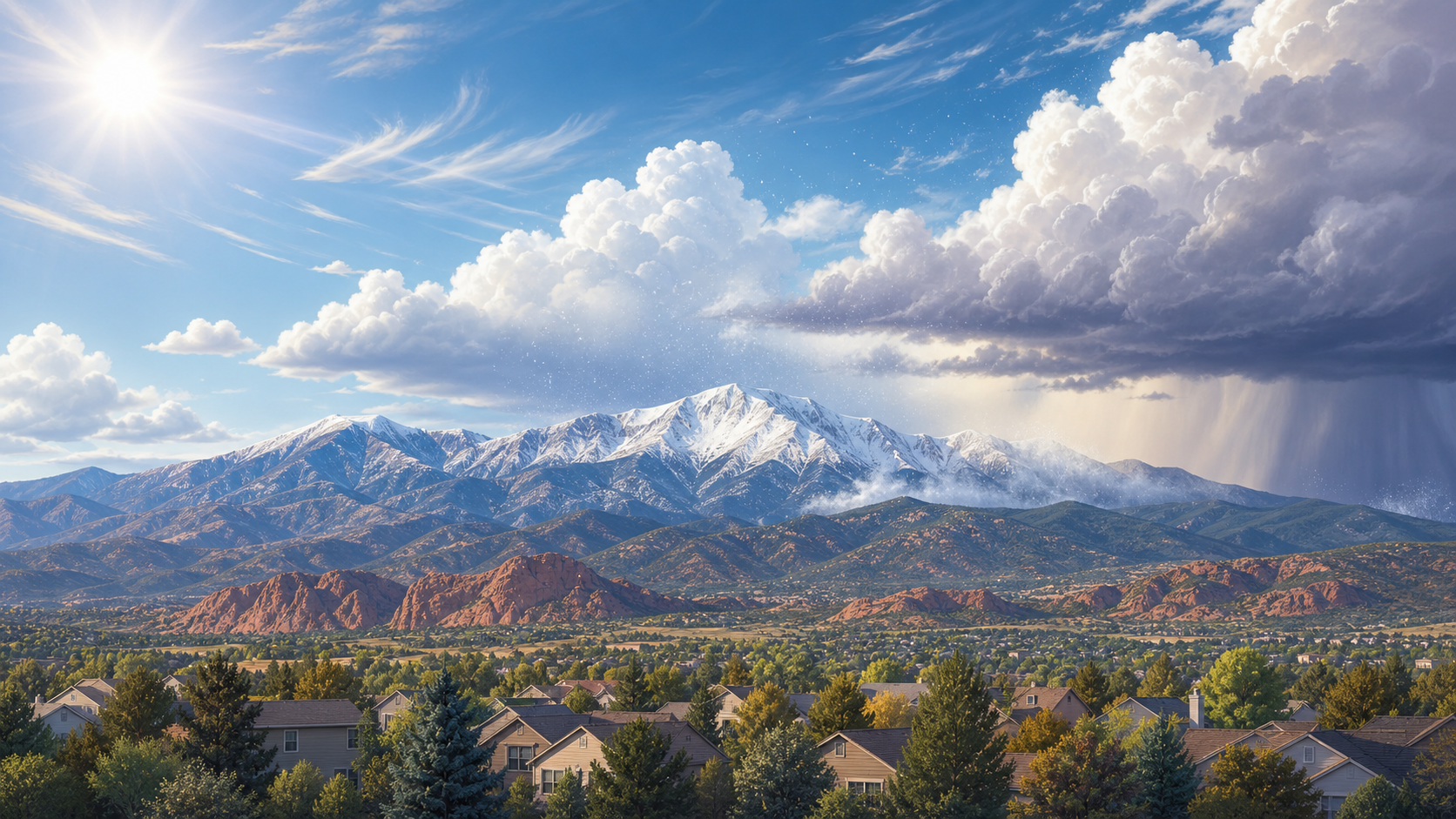
Colorado Springs weather is one of the first things new residents ask about! One of the hardest things to understand from a simple monthly temperature chart.
The city sits at roughly 6,035 feet above sea level, according to the City of Colorado Springs. The elevation, dry air, sunshine, nearby mountains, and location along the Front Range all shape daily life. You can experience a warm afternoon, a sharp temperature drop, strong wind, and snow within a short stretch of time.
If you are moving to Colorado Springs, knowing what to expect can help you prepare your household, evaluate homes, and settle in more comfortably.
Colorado Springs Is a High-Elevation City
At approximately 6,035 feet, Colorado Springs is considerably higher than many U.S. cities. Nearby foothill and mountain communities may be higher still. The City's official media information identifies the city's elevation and describes its connection to local athletic training.
People arriving from lower elevations sometimes notice that exercise feels harder at first. The air is also dry, and increased ultraviolet exposure is an important consideration at higher elevations.
The CDC explains that high-altitude environments involve lower air pressure, low humidity, cold exposure, and increased ultraviolet radiation. Its guidance for higher-altitude travel emphasizes gradual adjustment and lighter activity during the first part of a stay. Review the CDC's high-altitude health information, and consult a healthcare professional about personal medical concerns.
Give Yourself Time to Adjust
Many people adapt without major problems, but it is smart to make your first few days easier. Listen to your body rather than trying to maintain the exact exercise pace you had at a lower elevation.
Practical adjustment habits may include:
- Keeping physical activity lighter at first
- Drinking water regularly
- Using sunscreen and sun protection
- Limiting alcohol while adjusting
- Using lotion, lip balm, or a humidifier for the dry air
- Seeking medical advice for concerning or persistent symptoms
Elevation affects people differently. New residents with medical conditions, young children, or specific health concerns should ask a qualified healthcare provider for individualized guidance.
The Dry Climate Changes Everyday Routines
People moving from humid states often notice the dryness immediately. Skin, lips, houseplants, pets, wooden furniture, and musical instruments may all need different care.
You may also notice differences in cooking and baking. Water evaporates more quickly, and recipes may need high-altitude adjustments. A humidifier can make sleeping and winter heating more comfortable, but it should be cleaned and used according to the manufacturer's directions.
Dry conditions also make it important to understand outdoor fire restrictions and defensible-space recommendations when applicable, particularly for foothill or wooded properties.
Colorado Springs Weather Can Change Quickly
Colorado Springs experiences four seasons, but they do not always follow a predictable schedule. Warm winter afternoons, late-spring snow, summer thunderstorms, hail, strong wind, and rapid temperature swings are all possible.
Weather can also vary across the region. Northern areas near the Palmer Divide, western foothill locations, southern communities, and eastern plains may experience different conditions during the same storm.
Instead of relying only on a generic weather app, check current National Weather Service information and local emergency alerts when conditions may affect travel or outdoor plans.
Winter Is About Preparation, Not Just Snow Totals
New residents sometimes expect continuous deep snow all winter. In reality, roads and yards can change quickly as sun, temperature, wind, and the location of each storm affect melting and accumulation.
Even when total snowfall seems manageable, shaded streets, north-facing driveways, steep grades, and overnight refreezing can create icy conditions. Your specific commute and property layout matter.
Helpful winter preparations include:
- Keeping an ice scraper and basic cold-weather supplies in the vehicle
- Understanding your employer or installation's weather procedures
- Allowing extra travel time
- Knowing who is responsible for sidewalk and driveway snow removal
- Learning how to shut off exterior water and protect plumbing
- Confirming how an HOA handles community snow removal, if applicable
Spring Can Bring Snow, Wind, and Hail
Spring along the Front Range can feel especially unpredictable. A warm day does not necessarily mean freezing weather is finished for the season.
Homeowners should be cautious about turning irrigation systems on too early and should know how to protect outdoor plumbing when temperatures drop. Spring is also a good time to inspect drainage, gutters, downspouts, exterior seals, and roof condition.
Hail can occur during the warmer months. When buying a home, ask about the roof's age, permits and invoices for prior replacement when available, and the property's insurance history when appropriate. Your inspector and insurance professional can help you evaluate property-specific considerations.
Summer Often Includes Afternoon Weather
Colorado summers can bring warm days, cool evenings, intense sun, and afternoon thunderstorms. Outdoor plans—especially in the mountains—should account for rapidly changing conditions.
Not every Colorado Springs home has central air conditioning. Older homes may use window units, portable systems, evaporative cooling, or no active cooling system. Confirm the actual equipment rather than assuming that “cooling” means central air.
Sun exposure also affects how a home feels. West-facing rooms can heat up late in the day, while shaded and north-facing areas may retain snow or ice longer in winter.
Weather Features to Evaluate When Buying a Home
A Colorado Springs home search should include more than the kitchen and floor plan. Pay attention to features that affect year-round comfort and maintenance:
- Heating and cooling systems
- Roof age and visible condition
- Gutters, grading, and drainage
- Window condition and orientation
- Garage size and driveway slope
- Insulation and exterior seals
- Irrigation and outdoor plumbing
- Large trees and ongoing landscape care
- Wildfire exposure and insurability where relevant
- HOA maintenance and snow-removal responsibilities
Ask your home inspector and insurance professional about concerns specific to the property. A view or setting may be appealing, but it can also bring different wind, drainage, access, terrain, or maintenance considerations.
Prepare Pets and Household Items for the Climate
Pets may need time to adjust to dry air, colder surfaces, hot pavement, snow, and elevation. Keep water available and ask a veterinarian about individual health concerns.
Household items can also respond to low humidity. Wood floors, furniture, instruments, artwork, and plants may need monitoring. Follow manufacturer or specialist recommendations rather than trying to raise indoor humidity without understanding the risk of condensation or mold.
Frequently Asked Questions About Colorado Springs Weather
What is the elevation of Colorado Springs?
The City of Colorado Springs commonly identifies the city's elevation as approximately 6,035 feet. Elevation varies across the broader region and rises significantly in nearby mountain communities.
Does Colorado Springs get snow?
Yes. Timing and accumulation vary by storm and location. Sunshine and changing temperatures can melt snow quickly, while shaded areas and overnight refreezing can still create ice.
Do Colorado Springs homes have air conditioning?
Some do and some do not. Central air is more common in many newer homes, but it is not guaranteed. Verify the equipment for each property.
Is altitude sickness common after moving?
People react differently to altitude. Some notice temporary shortness of breath, fatigue, headache, or sleep changes. Seek medical advice for concerning symptoms and individualized guidance.
What should I keep in my car?
Needs vary by season and trip, but many residents keep water, layers, an ice scraper, phone charger, and basic emergency supplies. Mountain travel may require additional preparation.
Plan for the Climate Before You Choose a Home
Colorado Springs weather and elevation are part of what makes the area distinctive. They also affect commuting, home maintenance, insurance, outdoor plans, and everyday comfort.
Colorado Springs Home Search Group helps relocating buyers compare homes with the local details in mind—from commute and location to roof condition, cooling systems, drainage, taxes, HOAs, and total monthly costs.
If you are planning a move to the Colorado Springs area, contact our local team with Keller Williams Partners. We would be happy to answer your questions and help you create a relocation plan.
Information researched and last verified July 23, 2026. This article is for general educational purposes and is not medical, insurance, inspection, legal, or financial advice. Weather, property conditions, and individual health needs vary. Consult the appropriate qualified professional for personal guidance.
or another way